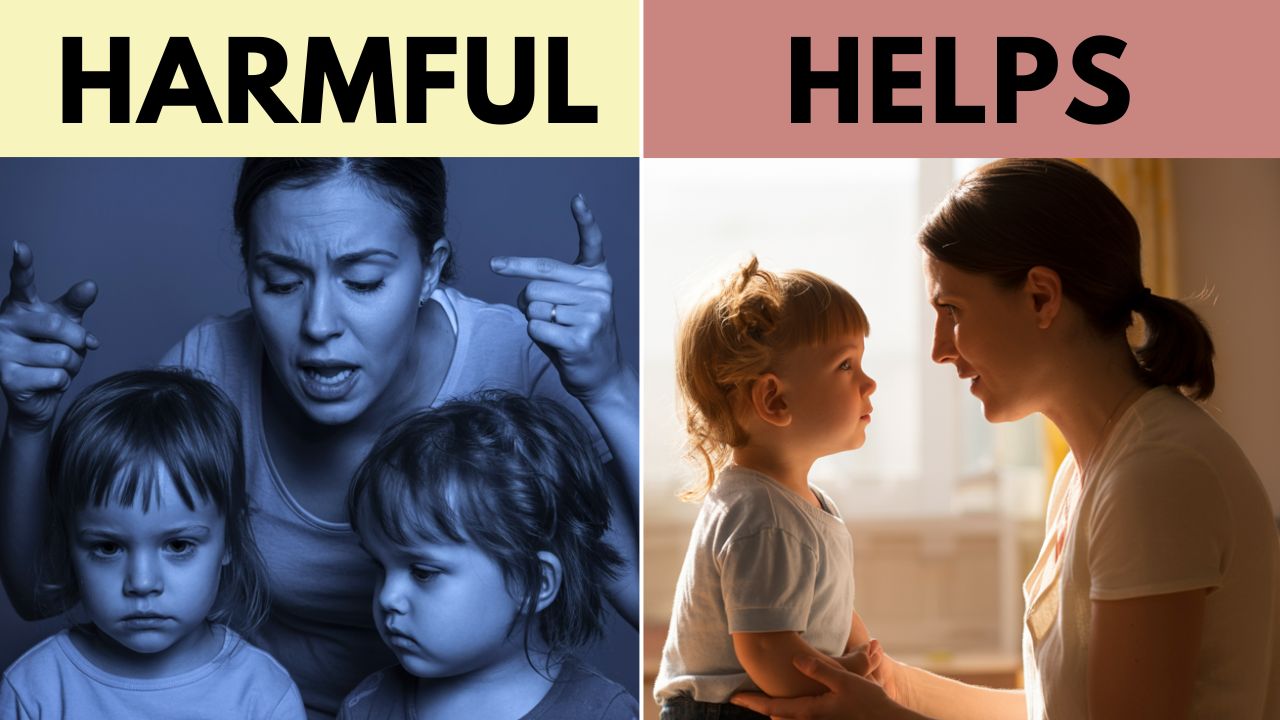
Use Two Words Today to Stop Losing Your Cool


If you’ve ever snapped at your kids and immediately felt guilty, this is for you.
If you’ve ever promised yourself you’d stay calm but found yourself yelling anyway this is for you too.
Because there are two words that can completely change your ability to regulate under pressure.
The Truth About Calm Parenting
Here’s what no one tells you about being a calm parent:
It’s not about never feeling angry or frustrated.
You’re going to feel those emotions—because you’re human, and because parenting is hard. The difference between a frazzled parent and a calm parent isn’t the absence of emotion. It’s what you do with those emotions that matters.
Recently, a mom inside my Amazing Parents Club shared something beautiful. She said:
“I want my kids to remember me as calm. I feel things deeply, and I’ve learned that when I don’t take care of my own needs, it’s so much harder to stay regulated.”
Can you relate to that? That longing to be remembered as the calm, grounded parent even when everything inside you feels anything but calm?
Here’s the good news: calm parenting is a learnable skill.
And it starts with two simple, powerful words most parents never think to use on themselves.
Those two words?
Try again.
Why “Try Again” Works for Parents Too
If you’ve been following me for a while, you know I teach “Try Again” as a positive discipline strategy for kids.
When your child whines, you say: “Try again with a respectful voice.”
When they slam a door, you remind: “Try again—close it gently.”
But here’s the part most parents miss: this same phrase can transform your own emotional regulation.
Think about the moments when you lose your cool, you yell, say something harsh, or react out of stress. Moments later, guilt floods in.
Now imagine pausing, taking a breath, and simply saying to yourself:
“Try again.”
That single shift takes you from judgment to learning.
From “I’m a terrible parent” to “That didn’t go well, let me repair and try again.”
And research backs this up.
Studies on self-compassion show that parents who treat themselves kindly who view mistakes as opportunities to learn rather than proof of failure, regulate emotions better and have more positive interactions with their kids (Neff & Faso, 2015).
Research on rupture and repair shows that when we mess up, then apologize and reconnect, it strengthens the parent-child bond (Siegel & Hartzell, 2003).
Your children don’t need a perfect parent.
They need a parent who models resilience, accountability, and growth.
“Try Again” is permission to be human and to keep improving.
The 3-Step Calm-Parent Reset
Here’s a quick, practical process you can use anytime you feel yourself starting to lose it. I call it the Calm Parent Reset. It takes less than 10 seconds.
1️⃣ Breathe — Respond Rather Than React
The moment you feel that surge of frustration, pause. Take one deep breath.
Deep breathing activates your parasympathetic nervous system, literally calming your stress response (Gerritsen & Band, 2018).
You’re not trying to erase the emotion—you’re buying yourself three seconds to choose your response.
Try box breathing:
Inhale 4 counts → Hold 4 → Exhale 4 → Hold 4.
Even one round resets your physiology.
2️⃣ Visualize Your Calm Self — Put On Your “Calm Parent Hat”
It might sound silly, but visualization works. Picture yourself as the calm, grounded parent you want to be.
When you imagine that version of yourself, your brain starts activating the same neural pathways as if you’re already there.
Remind yourself: “This is who I am becoming.”
3️⃣ Anchor in a Mantra — Remember Your Why
Use a short mantra that pulls you back to perspective:
“Twenty years from now, how do I want them to remember me?”
“They’re having a hard time, not giving me a hard time.”
“Tonight, I want to feel proud of how I handled this.”
Connecting to your core values improves emotional regulation and decision-making under stress (Creswell et al., 2013).
Building Your Calm-Parent Toolkit
Beyond in-the-moment resets, here are daily habits that help you build lasting calm.
1. Identify Your Triggers
Notice the patterns, morning chaos, sibling fights, bedtime battles. Awareness gives you the power to plan ahead.
2. Narrate Your Regulation
When you’re frustrated, say it out loud:
“Mommy’s feeling overwhelmed, so I’m going to take a few deep breaths.”
You’re teaching emotional literacy by modeling self-regulation in real time.
3. Acknowledge and Repair
When you lose your temper, circle back.
“I yelled, and that wasn’t fair. I’m sorry. Can I try again?”
That simple repair teaches your child that mistakes are opportunities to grow, not reasons for shame.
4. Watch Your Own “Nemeses”
Hunger, fatigue, and overstimulation make kids dysregulated—and parents too.
Eat, rest, move, hydrate. You cannot pour from an empty cup.
5. Lower the Bar When Life Is Hard
If you’re sick, stressed, or depleted, aim for good-enough parenting. Survival mode is okay. Calm can wait until tomorrow.
6. Get Support When You Need It
If staying regulated feels impossible, therapy isn’t failure—it’s strategy. Caring for your mental health is caring for your family.
The Science of Self-Compassion
Here’s something most parents get wrong: being gentle with yourself doesn’t make you “soft.”
Research shows that self-compassionate parents are more effective not less. They’re less defensive, more open to growth, and better at staying regulated (Neff & Faso, 2015).
Self-criticism activates your body’s threat system, flooding you with stress hormones.
Self-compassion activates your caregiving system, the same one that allows you to be nurturing with your kids.
When you talk to yourself like you would to a friend, you create the emotional safety needed for change.
Progress over perfection, always.
The Calm You Build Today Becomes Their Memory Tomorrow
Twenty years from now, your kids won’t remember every moment you lost your cool.
They’ll remember that you kept trying.
They’ll remember a parent who repaired when things went wrong, who modeled growth, and who kept showing up.
You don’t need to be the perfect parent.
You just need to be the parent who says, “I can try again.”
✨ Ready to go deeper?
Join me for my free Parenting Reset Workshop, where I’ll teach the full, psychology-backed framework thousands of parents are using to go from frazzled to confident.
Register now at https://drlindsayemmerson.com/reset
Start with one deep breath.
Put on your calm parent hat.


