5 Simple Shifts to Regain Control & Reduce Power Struggles

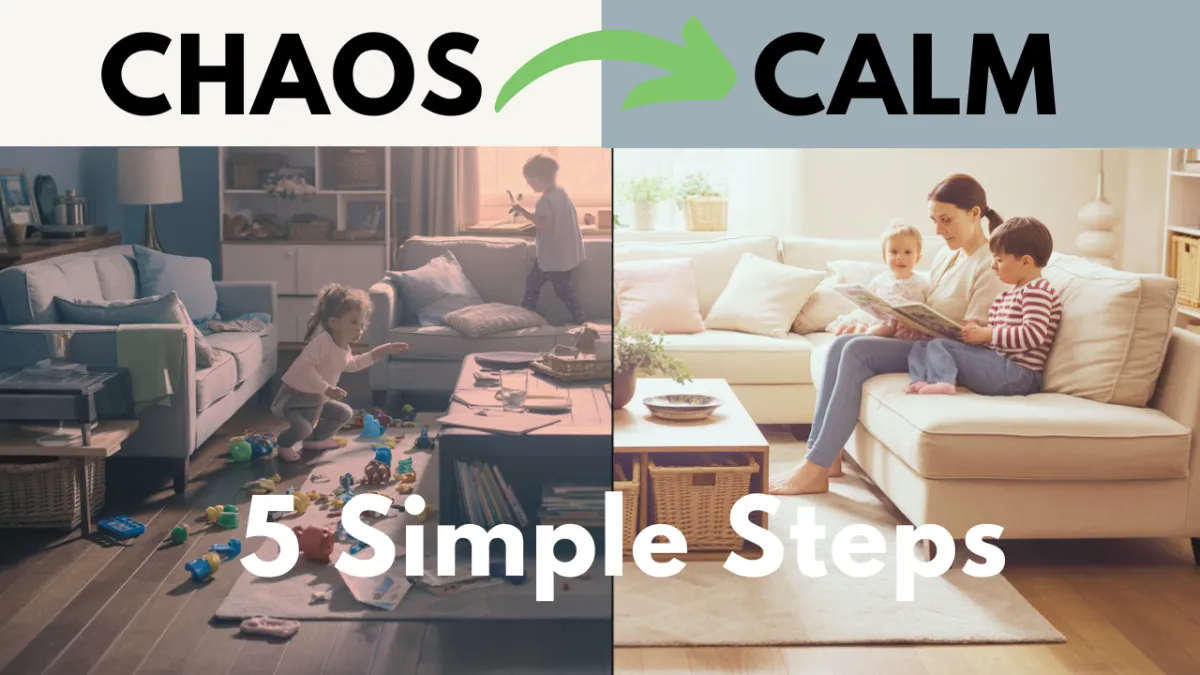
Parenting isn’t supposed to feel like constant chaos. Yet for so many families, it does.
If your home feels like a never-ending cycle of arguing, negotiating, and guilt, you’re not alone. Most parents I work with rate their daily “chaos level” somewhere between a 2 and 3 on a 3-point scale — not total disaster, but definitely far from calm.
The good news? There’s a system to bring that chaos down — one that blends warmth, structure, and research-based strategies you can start using tonight.
Welcome to the From Chaos to Calm Workshop, where I teach five actionable strategies from my 5 C’s Parenting Framework that help you restore calm, connection, and confidence at home.
The 5 C’s Parenting Framework: Your Roadmap to Calm
Over the past 15 years as a clinical psychologist, researcher, and mom of four, I’ve seen one truth play out again and again:
“Parenting doesn’t need to be perfect — it needs to be intentional.”
That’s why I developed the 5 C’s Parenting Framework — five key areas that every successful parenting approach builds on:
Communication – Getting your child to listen the first time.
Consistency – Building predictability that calms behavior.
Choices & Checkpoints – Promoting cooperation through autonomy.
Consequences – Teaching through correction, not punishment.
Check Yourself – Staying regulated and modeling emotional control.
These principles form the backbone of my Better Behavior Blueprint — the core program inside the Amazing Parents Club. They’re what transform “reactive” parenting into calm, confident leadership.
Strategy #1: Communication That Actually Lands
We’ve all been there: you ask your child to turn off the TV or put on their shoes, and they act like they didn’t even hear you.
The fix? Acknowledge and Respond.
Here’s how:
Get their attention — use their name or say “I need your eyes.”
Give a clear, simple direction: “It’s time to turn off the TV.”
Have them repeat it back — “Okay, I’ll turn off the TV.”
End positively: “Thanks for listening.”
This small step ensures your request is actually processed — not lost in distraction. It’s not control; it’s brain science. Children can’t follow directions they never truly heard.
Try this for one week. You’ll cut your “Why haven’t you done that yet?” battles in half.
Strategy #2: Consistency Starts at Bedtime
Sleep is the foundation for emotional regulation. Without it, everything else — focus, mood, behavior — unravels.
Start by tracking your child’s actual bedtime for one week.
Most parents discover it’s 30–60 minutes later than they thought.
Then, gradually shift bedtime 15–30 minutes earlier until you hit an age-appropriate window:
Ages 0–5 → 7:00–8:30 PM
Ages 6–11 → 8:30–9:30 PM
Teens → 9:00–11:00 PM
Stick to the same time every night (including weekends).
Yes, your child will resist. Your job isn’t to make them want to go to bed — it’s to hold the boundary calmly and consistently.
Even one week of consistent sleep changes everything: calmer mornings, fewer meltdowns, and better cooperation throughout the day.
Strategy #3: Two Good Choices
Power struggles are often control struggles. When kids feel they have no control, they push back on everything.
The fix: Offer two good choices — both acceptable to you.
Examples:
“Red shirt or blue shirt?”
“Carrots or broccoli?”
“Leave the park in five minutes or ten?”
If they refuse both, calmly restate the options and let them know you’ll choose if they don’t.
This strategy meets a child’s developmental need for autonomy while keeping you in charge. Studies show kids given age-appropriate choices are far more compliant with non-negotiable rules later on.
Strategy #4: Try Again
When your child makes a mistake — uses a rude tone, grabs a toy, or slams a door — don’t shame them. Teach them.
Say, “Oops, that’s not how we do it. Try again.”
Then help them redo it correctly:
“Can you ask politely this time?”
“Let’s close the door gently.”
For young kids, guide them physically if needed. For older ones, describe what to do and let them practice independently.
This isn’t punishment — it’s practice.
Each redo strengthens the neural pathway for better behavior next time. You’re teaching self-correction instead of fear.
Strategy #5: One Deep Breath
Sometimes the chaos isn’t coming from your child — it’s coming from your nervous system.
Before you react, take one deep breath.
Inhale through your nose, exhale through your mouth — about three seconds total.
This tiny pause shifts your body out of fight-or-flight mode and back into your thinking brain.
It’s not about pretending you’re calm — it’s about creating just enough space to respond rather than react.
That one breath can change:
“Brush your teeth now or you’ll lose screen time!”
into
“It’s hard to stop playing, but it’s time to brush teeth. Do you want me to help you pause the game or can you do it yourself?”
You’re modeling emotional regulation — one of the most powerful lessons your child will ever learn.
The Transformation: From Chaos to Calm
If you apply just these five strategies tonight — acknowledge and respond, consistent bedtime, two good choices, try again, and one deep breath — you will see change.
Not someday. Within days.
But remember, these are just five tools from a complete system — the 5 C’s Parenting Framework — that transforms families from surviving to thriving.
Ready to Go Deeper?
The Amazing Parents Club gives you full access to the Better Behavior Blueprint course, weekly live Q&As, downloadable scripts, and a supportive community of parents learning alongside you.
💛 Membership includes:
44 video lessons
Printable handouts + action plans
Two masterclasses (Sleep and Screens)
Quarterly live workshops
Weekly coaching sessions
All for $47/month — less than one private coaching session.
You’ll walk away knowing exactly what to do in any parenting moment, confident that your home can feel calm, connected, and cooperative again.
Ready to stop the guesswork? Join The Amazing Parents Club for psychology-based strategies, live support, and a judgment-free community → https://www.drlindsayemmerson.com/club
Want more tools like this? Check out the Better Behavior Blueprint for step-by-step support in creating a calm, connected, and respectful home without yelling, threats, or giving in.


